Are Neoprene Bags Durable Enough? A Practical Guide
Table of Contents
- What Neoprene Bags Are Actually Made Of (and Why It Matters)
- How Long Do Neoprene Bags Last?
- Tear, Abrasion, and Water Resistance: What Neoprene Handles Well
- Where Neoprene Bags Wear Out First: Seams, Handles, Zippers, and Lining
- Load Limits and Heavy Everyday Use: What to Expect
- How to Clean a Neoprene Bag (and What Damages It)
- Neoprene vs Canvas Bags: An Honest Durability Comparison
- Pros, Cons, and How to Choose a Neoprene Bag That Lasts
- Frequently Asked Questions
Last Updated: October 21, 2026
What Neoprene Bags Are Actually Made Of (and Why It Matters)
Neoprene is a synthetic rubber made from polychloroprene, a material built to resist water, heat, and flex fatigue. That is the short answer to whether neoprene bags are durable enough: the material itself holds up well.
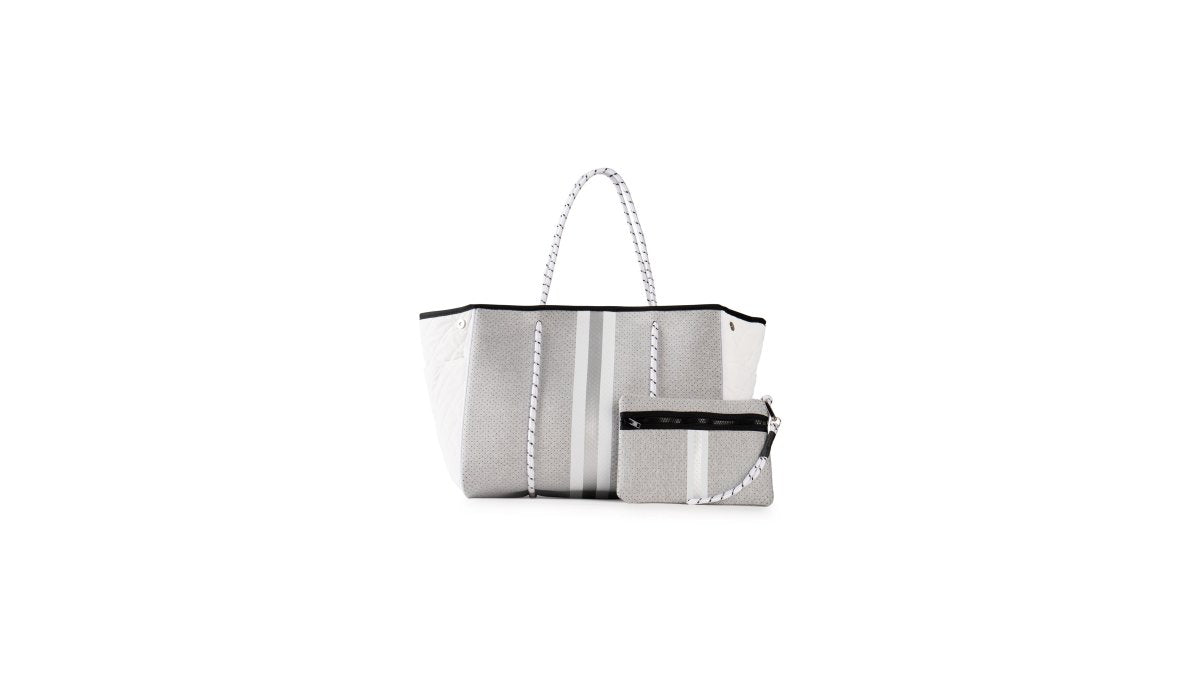
At Haute Shore, we build our signature Greyson totes from premium neoprene for exactly this reason. The fabric is soft, flexible, and water-resistant, but it is the construction that keeps a bag together.

The construction details that decide durability
Three things separate a bag that lasts from one that falls apart:
- Stitching density at stress points like handle anchors
- Handle attachment method, whether sewn through or bar-tacked
- Lining and bottom support, which stops sag and shape loss
A neoprene bag with weak stitching will fail long before the fabric does.
How Long Do Neoprene Bags Last?
A well-made neoprene bag typically lasts two to four years with regular use, and longer with gentle care. Cheaper builds often show wear within a year. But "how long" depends heavily on use pattern, so here is a more realistic breakdown.
Expected lifespan by use pattern
- Daily commuter (5+ days/week): 18-30 months before visible wear at handles, corners, or zippers. The fabric itself may still be intact, but trim and stitching often need attention first.
- Weekend or occasional use (1-2 days/week): 3-5 years with basic care. Rotation and light loads extend this further.
- Travel or gym bag (heavy, repeated loading): 12-24 months if overloaded regularly; 2-3 years if kept within reasonable weight limits.
These ranges assume hand washing, air drying, and avoiding prolonged heat exposure. Machine washing or hot-car storage can shorten lifespan significantly.
Signs your neoprene bag is wearing out
Watch for these early indicators before failure:
- Fraying or loosening stitches at handle anchors, the first sign of structural stress
- Zipper drag or skipped teeth, often precedes zipper tape separation
- Thinning or shine at corners and bottom edges, abrasion wear from surfaces
- Lining tears at seams or staining that won't wash out, cosmetic but can progress to structural
What actually determines lifespan
The neoprene fabric itself is rarely the limiting factor. Most bags fail at the components that hold the bag together: handle stitching, zipper quality, lining durability, and bottom support. A bag with reinforced bar-tacked handles, a quality zipper, and a removable hard liner will typically outlast a cheaper build by a year or more, even if the neoprene sheet is identical.
Tear, Abrasion, and Water Resistance: What Neoprene Handles Well
Neoprene handles water and everyday bumps well, but it is not cut-proof or fully waterproof. Understanding the difference protects your expectations.
Here is how the material performs across common stress types:
| Stress Type | Neoprene Performance | Watch Out For |
|---|---|---|
| Water and rain | Resists moisture well | Open seams let water in |
| Abrasion | Good for daily contact | Thins at corners over years |
| Tearing | Resists small snags | Sharp edges can cut it |
| Flexing | Excellent, springs back | None significant |
| Heat | Moderate tolerance | Avoid hot cars and radiators |
Water resistance is the standout. A spilled coffee or a rainy commute will not ruin a neoprene bag the way it can soak a canvas tote.
Abrasion resistance is solid for daily wear. The material cushions impacts, which is why neoprene works well for gear bags and travel totes.
Where Neoprene Bags Wear Out First: Seams, Handles, Zippers, and Lining
Seams and handles fail before the neoprene body does. That is the pattern across almost every worn-out neoprene bag.
The fabric is tough. The weak points are the parts holding it together.
- Handle anchors: Where paracord or straps meet the bag, stitching takes constant load. This is failure point number one.
- Zippers: A cheap zipper jams and pulls loose from the tape. A quality one lasts years.
- Lining: Thin linings tear at the seams and stain easily.
- Bottom panel: Without a hard liner, the base sags and stretches over time.
Our Greyson totes use paracord handles and a removable hard bottom liner for this reason. The liner holds the base flat so the bag keeps its shape instead of stretching under weight.
Load Limits and Heavy Everyday Use: What to Expect
Neoprene bags handle moderate daily loads well, but they are not built for hauling heavy gear indefinitely. Think laptop, water bottle, gym clothes, and a few extras, not bricks. Here is a more practical breakdown of what "durable enough" means under load.
Realistic weight guidance
There is no universal load rating for neoprene bags, but a common pattern among well-constructed totes is:
- Light load (under 5 lbs / 2.3 kg): Phone, wallet, keys, small water bottle, light jacket. Any decent neoprene bag handles this indefinitely.
- Moderate load (5-10 lbs / 2.3-4.5 kg): Laptop, charger, lunch, water bottle, gym clothes. This is the sweet spot for most neoprene totes with reinforced handles and a bottom liner.
- Heavy load (10-15 lbs / 4.5-6.8 kg): Laptop plus gym gear plus books. Only bags with bar-tacked handle anchors and a hard bottom liner should be trusted here, and even then, expect faster wear at stress points.
- Over 15 lbs / 6.8 kg: Not recommended for extended daily carry. Handle stitching and seam tape will fatigue quickly, and the bag may stretch out of shape.
These are practical guidelines, not manufacturer specifications. Always check the bag's own care and use instructions.
Where load stress concentrates
When you load a neoprene tote, stress does not distribute evenly. Watch these points:
- Handle anchors: The stitching where handles meet the bag body takes the full load. Bar-tacked or box-X stitching distributes stress better than single-stitch seams.
- Bottom panel: Without a hard liner, the base sags and stretches under weight, pulling seams apart over time.
- Zipper tape: A heavy load pressing against a closed zipper stresses the tape and teeth, especially if the bag is overstuffed.
- Shoulder strap attachment points: If the bag has a detachable strap, the clips and D-rings are common failure points under load.
How to carry heavy loads without shortening bag life
- Center the weight: Place the heaviest items over the bottom liner, not against the sides.
- Distribute evenly: Avoid loading one side of the bag, which twists the handles and stresses one anchor more than the other.
- Don't overstuff: If the zipper strains to close, the bag is overloaded. Overstuffing stresses seams and zipper tape simultaneously.
- Check anchors before trusting: Load the bag fully and lift it by the handles. If you see stitching stretch or fabric pucker at the anchors, reduce the load.
If you regularly carry a heavy laptop plus gym gear, choose a bag with a hard bottom liner and sturdy handles. That combination makes the difference between a bag that lasts and one that droops within months.
How to Clean a Neoprene Bag (and What Damages It)
Cleaning a neoprene bag is simple: hand wash with mild soap, rinse, and hang dry. Skip the washing machine and the dryer.
Here is the routine we recommend:
- Empty the bag and remove the wristlet and liner
- Mix a little mild soap in cool water
- Wipe the surface with a soft cloth, working out stains gently
- Rinse with a clean damp cloth
- Hang to dry away from direct heat
What damages neoprene:
- Washing machines and dryers: Heat and tumbling break down the material
- Harsh chemicals: Bleach and strong solvents degrade the rubber
- Direct heat: Radiators, hot cars, and irons warp the shape
- Soaking: Prolonged soaking can weaken seams
Neoprene vs Canvas Bags: An Honest Durability Comparison
Neoprene wins on water resistance and flexibility. Canvas wins on abrasion toughness and repairability. Neither is universally better.
| Factor | Neoprene | Canvas |
|---|---|---|
| Water resistance | High | Low unless waxed |
| Abrasion resistance | Good | Very good |
| Weight | Light | Heavier |
| Cleaning | Hand wash, easy | Machine washable |
| Shape retention | Good with liner | Can sag |
| Repairability | Moderate | Easy to patch |
Canvas is the tougher fabric against scuffs and tears. It also patches easily and can go in the washing machine.
Neoprene is lighter, softer, and shrugs off rain and spills. For a commuter bag or travel tote that faces weather and coffee, neoprene is the more practical pick.
The honest answer: choose neoprene for water resistance and comfort, canvas for maximum toughness.
Pros, Cons, and How to Choose a Neoprene Bag That Lasts
A neoprene bag is durable enough for daily use if you pick the right build and care for it. The material is not the weak link. Construction is.
Pros:
- Water-resistant and easy to wipe clean
- Lightweight and comfortable to carry
- Soft, flexible, and holds its shape with a liner
- Cushions contents and resists everyday wear
Cons:
- Can cut or snag on sharp edges
- Seams and handles wear before the fabric
- Not fully waterproof
- Heat sensitive
How to choose one that lasts:
- Check handle stitching and look for reinforced anchors
- Confirm a removable hard bottom liner
- Test the zipper for smooth movement
- Look for a washable, quality lining
Our Greyson Aspen Neoprene Tote checks these boxes: paracord handles, a removable hard bottom liner, a wristlet pouch, and a washable build. It is designed for work, travel, gym, or a diaper bag, and it holds its shape through daily use.
The real difference between a neoprene bag that lasts years and one that fails in months comes down to seams, handles, and bottom support. Buy for construction, then care for it well.
Frequently Asked Questions
Is neoprene a good material for bags?
It is for most everyday carry. Neoprene bags are lightweight, flexible, tear-resistant, and hold their shape well, which is why the material works for totes, crossbodies, and gear bags. They resist light moisture and wipe clean easily. The trade-offs are heat sensitivity and a softer structure than leather or structured canvas, so they suit commutes, travel, and gym-to-office days better than heavy hauling of sharp or abrasive loads.
Can neoprene bags handle heavy everyday loads?
They can handle a laptop, water bottle, gym kit, and daily essentials without strain, but neoprene is a soft material, so very heavy loads concentrate stress at the handles and seams. Check how the handles are attached and whether the bag has a removable hard bottom liner, like the Greyson tote line, which helps the base keep its shape. For loads above roughly a week's groceries, a structured canvas or leather bag is the safer choice.
Do neoprene bags stretch, tear, or lose their shape over time?
Neoprene has some give, so it flexes rather than tears under normal daily wear. Over years of regular use, the areas that stretch most, such as handle attachment points and the top opening, can soften. Bags with a removable hard bottom liner and snap side panels hold their silhouette better. Storing the bag unstuffed and avoiding hanging it by one handle when full will help it keep its shape.
How do you clean and care for a neoprene bag?
Wash with mild soap and cool water, then hang dry away from direct heat. Spot-clean small marks with a soft cloth rather than scrubbing. Avoid machine washing, tumble drying, bleach, and hot radiators, since heat is what degrades neoprene fastest. Coated or reflective finishes should be hand washed only. A quick wipe-down once a week keeps everyday marks from setting in, and the bag will look presentable far longer.
A durable bag should keep up with your busiest days, not slow you down. Haute Shore builds neoprene totes with paracord handles, removable hard bottom liners, and washable, water-resistant material, all designed to hold their shape through daily wear. Explore the collection and find a bag that looks as good as it performs. Get started with Haute Shore and carry a tote built to last.