How to Clean Gym Tote Bags: A Step-by-Step Guide
Table of Contents
- How to Clean Gym Tote Bags: Step-by-Step
- How to Clean a Neoprene Bag Without Damaging It
- How to Deodorize a Gym Bag So It Smells Fresh
- How to Remove Stains From a Gym Bag
- How Often to Wash a Gym Bag
- How to Dry Gym Tote Bags and Prevent Mildew
- Conclusion
- Frequently Asked Questions
Last Updated: October 19, 2026
How to Clean Gym Tote Bags: Step-by-Step
Your gym tote bag carries sweaty clothes, damp towels, and dirty shoes several times a week. That mix creates the perfect home for bacteria and odor. Learning how to clean gym tote bags properly keeps them fresh, protects the fabric, and helps them last for years.
At Haute Shore, we design neoprene totes meant to move with you from the office to the court. We also know they need real care. This guide walks you through the full cleaning process, from a quick wipe-down to a deep wash.

Below, we cover the exact steps, the right products, and the mistakes that ruin bags.
What You'll Need Before You Start
Gather your supplies first so you don't stop mid-clean. Here is your checklist:
- Mild soap or gentle detergent
- Soft brush or old toothbrush
- Two clean cloths
- Cold water
- White vinegar
- Baking soda
- A well-ventilated drying spot
Check the fabric care label inside your bag before anything else. Neoprene, canvas, and synthetic fabric each have different limits. The label tells you whether machine washing is safe.
Skip bleach and harsh cleaners. They break down fibers and fade color fast.
The Basic Cleaning Workflow
Start by emptying the bag completely. Turn every pocket inside out and shake out crumbs, sand, and gym dust. Remove the wristlet pouch and any hard bottom liner.
Next, wipe the interior lining with a cloth dipped in mild soapy water. Pay attention to corners where sweat collects. Rinse the cloth and wipe again to lift the soap.
Then spot clean the outside. A soft brush works well on textured surfaces. Work in small circles and don't soak the fabric.
Let the bag air dry fully before you reload it. Damp towels go straight into a separate bag, not loose inside.
How to Clean a Neoprene Bag Without Damaging It
Neoprene is tough but it holds water and odor. The good news: it cleans up easily if you avoid heat and harsh scrubbing.
Follow these steps for a neoprene bag:
- Empty the bag and remove the wristlet and liner.
- Mix a few drops of mild soap into cold water.
- Wipe the surface with a soft cloth. Don't scrub hard.
- Rinse with a clean damp cloth to remove soap residue.
- Blot excess water with a dry towel.
- Hang the bag open in a ventilated area to air dry.
Never put neoprene in the dryer. Heat warps the material and can shrink it. Keep it away from direct sunlight too, since UV fades color over time.
For a deeper clean, hand wash only. Fill a basin with cold water and mild soap, submerge the bag briefly, and gently squeeze. Skip the washing machine unless the care label says otherwise.
How to Deodorize a Gym Bag So It Smells Fresh
Odor comes from bacteria and fungi feeding on sweat, skin cells, and moisture trapped in fabric, seams, and linings. Covering the smell with a dryer sheet or spray does not fix the source. Deodorizing works when you remove the moisture, lift the residue, and reduce the bacteria load, without damaging the material.
Start with a full dry-out. Before any remedy, empty the bag, turn it inside out, and let it air dry completely in a ventilated area. If the bag is damp, no powder or spray will reach the bacteria in the seams. A common pattern is that a bag still smells after treatment because the lining or base never dried fully.
Baking soda for absorbent fabrics. For canvas, nylon, and polyester linings, sprinkle a thin layer of baking soda inside the main compartment and pockets, leave it overnight, then vacuum or shake it out. Baking soda absorbs moisture and odor compounds. Do not use it on leather trim or suede, it can leave a residue that is hard to remove.
White vinegar for hard surfaces and linings. Mix one part white vinegar with one part water in a spray bottle. Lightly mist the interior lining, handles, and base, then wipe with a clean cloth and air dry fully. Vinegar lowers the pH and helps kill odor-causing bacteria. Test on a hidden area first, especially on colored neoprene or synthetic fabric, because vinegar can affect some dyes. Do not use vinegar on leather; it can dry and crack the finish. Persistent smells often linger in the fabric fibers themselves, requiring a more comprehensive approach to removing gym odors from your activewear.
Lemon juice for stubborn spots, with caution. Lemon juice can help with fresh-smelling stains on light-colored canvas, but it is acidic and can fade color. Dilute it with water, test on a hidden spot, and rinse thoroughly. Skip it on neoprene, leather, and dark fabrics.
Disinfecting sprays and wipes. Use them on high-touch surfaces like handles and the base, not as a substitute for washing. Choose a product labeled for the material, test on a hidden area, and follow the label’s dilution and ventilation instructions. Never spray inside a bag and zip it closed, trapped moisture and fumes create mildew and a lingering chemical smell.
Odor absorbers between uses. A cedar block, charcoal sachet, or a small bag of baking soda placed in the bag between workouts helps absorb residual moisture and odor. These are maintenance aids, not a fix for a dirty bag. Replace or refresh them regularly.
When to deep clean instead. If the smell returns within a day or two of deodorizing, the bag likely needs a full wash. Odor that persists after a proper wash and full dry usually means mildew is in the seams or lining, which needs a vinegar wipe and extended drying rather than more fragrance.
How to Remove Stains From a Gym Bag
Treat stains fast. The longer mud, sweat, or drink spills sit, the harder they set.
Blot fresh stains with a dry cloth. Don't rub, since rubbing pushes the stain deeper into the fabric.
For mud, let it dry first, then brush off the loose dirt. Follow with mild soapy water and a soft brush.
For sweat and oil stains, a paste of baking soda and water works well. Apply it, wait fifteen minutes, then rinse.
For ink or grease, dab a small amount of mild detergent on a cloth and work from the outside of the stain inward. Rinse thoroughly so no soap stays behind.
Always test any cleaner on a small hidden area first. Some fabrics react badly to vinegar or lemon juice.
How Often to Wash a Gym Bag
How often to wash a gym bag depends on how hard you use it. A good rule: spot clean weekly and deep clean monthly.
Increase the frequency if you notice:
- A lingering smell
- Visible stains or sweat marks
- Crusty buildup in corners
- Dampness that won't dry out
If you hit the gym four or more times a week, plan a full wash every two to three weeks. Wipe the interior after every session to slow the buildup.
How to Dry Gym Tote Bags and Prevent Mildew
Drying is where most people go wrong. A damp bag grows mildew fast, and mildew smell is very hard to remove.
Open every pocket and turn the bag inside out. Hang it in a well-ventilated area with good airflow. A drying rack near a window works well, but keep it out of harsh direct sun.
Stuff the bag lightly with dry towels to hold its shape and speed drying. Replace the towels once they feel damp.
Never dry a gym tote bag in a hot dryer. Heat damages neoprene, shrinks synthetic fabric, and can warp the shape.
If you spot mildew, wipe the area with diluted white vinegar and air dry completely before storing. Store the bag open, never sealed in a closet.
Conclusion
A clean gym tote bag protects your gear, your clothes, and your confidence. The routine is simple: wipe weekly, deep clean monthly, and always air dry fully.
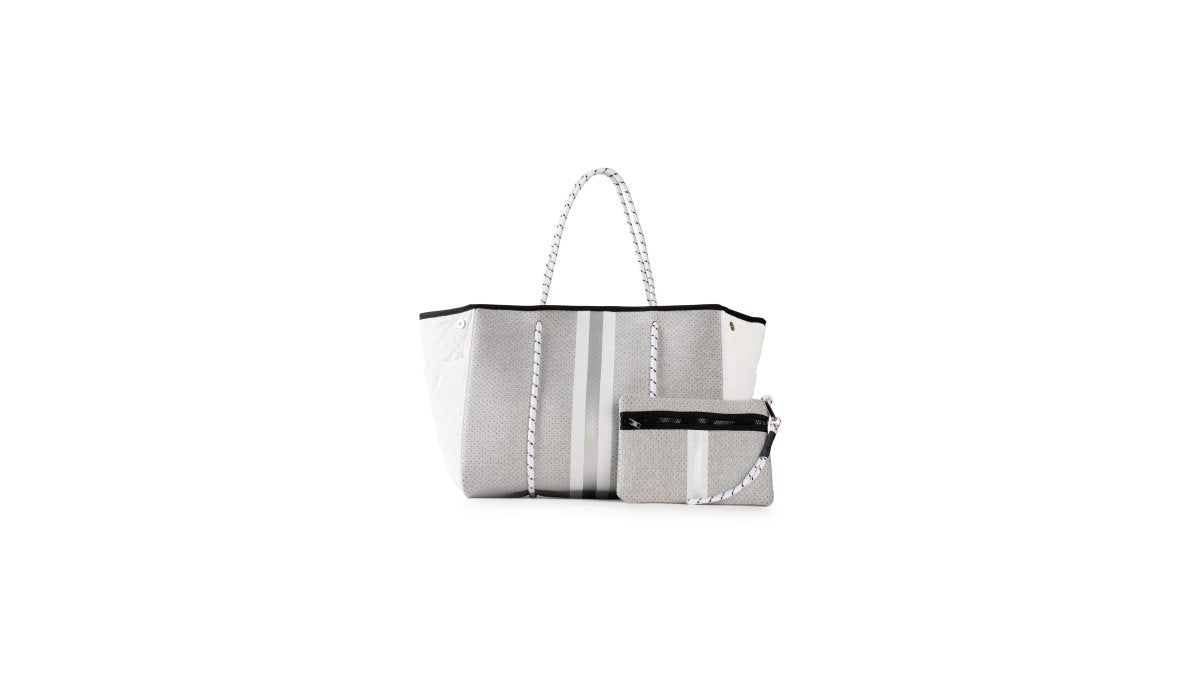
At Haute Shore, our neoprene Greyson totes are built for this kind of life. They move from the office to the gym and back, with washable neoprene that handles mild soap and air drying with ease. The removable hard bottom liner and wristlet pouch make cleaning simple, and the side panels give you room for everything.
Ready for a bag that works as hard as you do? Shop the Greyson collection at Haute Shore and find your new everyday carry.
Frequently Asked Questions
Can you put a gym tote bag in the washing machine?
It depends on the material and the care label. Neoprene totes like the Haute Shore Greyson should be washed by hand with mild soap and hung to dry, not machine washed. Canvas bags sometimes tolerate a cold, gentle cycle, but check the fabric care label first. Machine washing can warp structured sides, damage paracord handles, and break down the lining, so hand washing is the safer default for gym tote bags.
How do you get sweat smell out of a gym bag?
Empty the bag completely, then wipe the lining with a cloth dampened with mild soap and water. Let it air dry in a well-ventilated area, ideally outdoors in indirect sun. For lingering odor, place an open box of baking soda inside overnight, or wipe with a diluted white vinegar solution and rinse thoroughly. Never store sweaty clothes or damp towels in the bag, since that is what causes the smell in the first place.
How often should you clean a gym tote bag?
Wipe down the interior weekly if you use the bag daily, and do a full hand wash every two to four weeks. Spot clean stains as soon as you notice them. If the bag holds sweaty clothes or damp towels regularly, clean it more often. A quick weekly refresh keeps odor and bacteria from building up and makes the deeper washes easier.
How do you dry a gym tote bag without damaging it?
Stuff the bag lightly with clean towels to hold its shape, then hang or lay it in a well-ventilated area away from direct heat. Never put a neoprene or canvas tote in a dryer, since heat can shrink or warp the material. Flip the lining outward so air reaches every surface. In humid weather, a fan speeds drying and helps prevent mildew.